18 August, 2026
| Mark
Barot


1. Introduction
2. Why More Businesses in Melbourne Are Going Solar
3. So, What Does Commercial Solar ROI Actually Mean?
4. Where the Real Savings Come From
5. Picking the Right Commercial Solar Setup
6. Mistakes That Slow Down Your Returns
7. Conclusion
8. Frequently Asked Questions
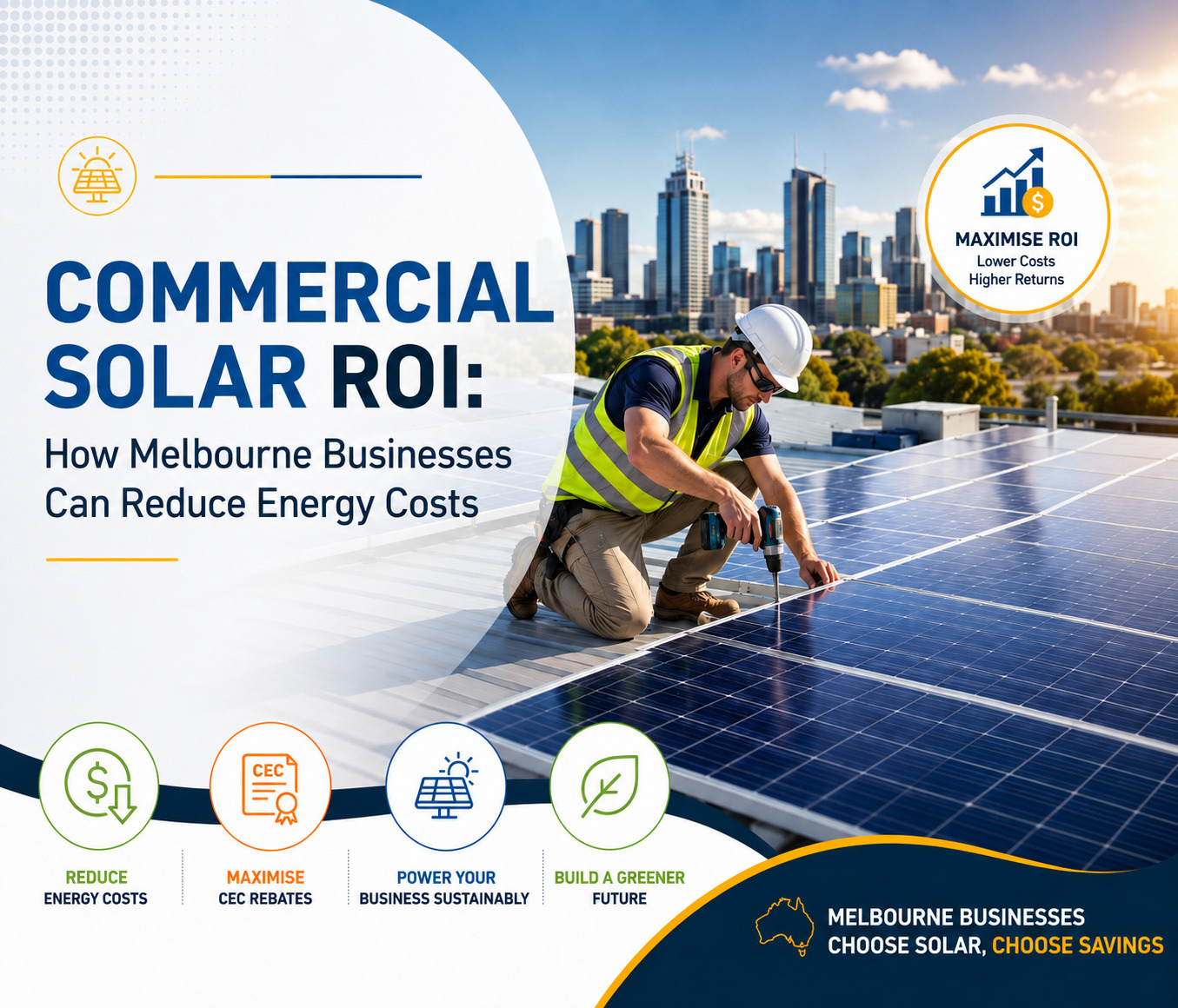
If you own a business in Melbourne, chances are your electricity bill has become a regular headache. It doesn't matter if you're running a small retail shop, a warehouse, or a manufacturing plant - power costs keep climbing, and most business owners are tired of watching their profits shrink because of it. That's the main reason so many companies are now looking into commercial solar Melbourne as a real fix, not just a temporary patch.
Solar used to be seen as something only "eco-conscious" businesses did. That's changed. Today it's viewed more as a financial move than an environmental one. So let's talk about how commercial solar power actually saves money, what kind of returns you can realistically expect, and whether it's worth the investment right now.
Melbourne gets a fair amount of sun across the year, and Victoria's electricity prices haven't exactly been going down. Put those two things together and commercial solar panels start looking like an obvious choice rather than a risky one.
There's also the independence factor. Once you install a commercial solar system, you're not entirely at the mercy of the grid or sudden tariff increases. You're generating your own power, usually right when your business needs it the most - during the day.
In simple terms, ROI is how long it takes for the system to pay for itself through savings, and what you gain once it does.
Most commercial solar installation Melbourne projects pay themselves off somewhere between 3 and 6 years. That number moves around based on a few things:
How big your system is
Your daily power usage
Roof space and how much sun it gets
Any rebates or incentives you qualify for
Whether you're adding a battery or not
Once that payback period is done, you're basically getting free electricity for the next 15-20 years, since most panels are built to last two decades or more.
Here's the thing - not every business gets the same return, and that's fine. A few factors decide how fast you break even.
Your energy usage pattern matters a lot. If your business runs mostly during daylight - think cold storage, factories, retail stores - you'll get more out of solar panels for business because you're using the power as it's made, not sending it back to the grid.
System size needs to match your actual needs. A properly sized commercial solar system avoids the trap of overspending on capacity you don't need, while still handling your peak demand comfortably.
Roof direction and shading play a role too. North-facing roofs without much shade tend to produce more energy here in Melbourne, which naturally affects your savings.
Don't ignore the incentives. Victoria has rebate schemes that can knock a good chunk off the upfront cost of commercial solar installation, which shortens your payback time even more.
Lower electricity bills are the obvious win, but there's more to it than that.
Peak demand charges tend to hit businesses hard, and solar reduces how much you rely on the grid during those expensive hours. It also protects you from future price hikes - once you've got solar, a big portion of your energy cost is basically locked in.
There are tax advantages too. Businesses can often claim depreciation on commercial solar energy systems, which helps the overall numbers work out better. And if you ever plan to sell or lease your commercial property, having solar installed tends to make it more attractive to buyers and tenants.
Here's where a lot of businesses mess up. They go with whoever gives the cheapest quote, without checking what's actually being installed. Cheap panels or low-quality inverters might save money upfront, but they cost more down the line through poor performance and repairs.
When you're comparing commercial solar solutions, it's worth checking:
Whether the installer has real experience with commercial projects, not just residential ones
The actual quality of panels and inverters they're offering
What kind of warranty and after-sales support comes with it
Whether the quote is transparent, with no surprise costs later
If they've actually assessed your site properly before quoting
A decent installer will look at your real energy usage first, not just try to sell you the biggest system available.
Do You Need Battery Storage?
Honestly, it depends on how your business operates. If most of your work happens during the day, you might not need a battery at all - you're already using the solar power as it's generated. But if you run evening shifts or want backup during outages, adding storage to your commercial solar systems Melbourne setup can be worth it, even though it stretches out your payback period a little.
A lot of businesses rush into commercial solar installation without thinking it through, and it ends up costing them later. Some things to watch out for:
Installing a system that's either too small or way bigger than what you need
Skipping a proper roof inspection before installation
Going with the cheapest quote without checking product quality
Not planning for future business growth
Forgetting about regular maintenance once it's installed
Avoiding these mistakes alone can shave months, sometimes years, off your payback period.
Going solar isn't just about doing something good for the environment anymore - for most Melbourne businesses, it's simply a smart way to manage costs long-term. With electricity prices unlikely to drop and solar technology getting better every year, the ROI on commercial solar panels keeps improving. Whether you're running a small store or a large facility, the right commercial solar system can mean years of lower bills and a more stable bottom line.
If you're thinking about making the switch, take the time to understand your actual energy needs first. Get a proper site assessment done, and work with someone who genuinely understands commercial solar installation Melbourne - not just a generic residential setup pushed onto a business.
How long before commercial solar pays for itself in Melbourne?
Usually somewhere between 3 and 6 years, depending on your system size, usage, and any rebates you qualify for.
Does every business save the same amount with solar?
Not really. Businesses using more power during the day usually see faster returns than ones that mostly operate at night.
Is a battery necessary for commercial solar?
Not always. It really comes down to your working hours and whether backup power matters to you.
How much roof space do I need?
That depends entirely on your energy needs. A proper site assessment will tell you the right system size for your space.
Are there rebates for commercial solar in Melbourne?
Yes, Victoria offers a few incentive schemes that can lower your upfront installation costs.