


Key Takeaways
- On grid is the best fit for most Melbourne homes. It costs less, is simple to run and can earn feed-in credits for excess power.
- Off grid is rarely worthwhile in the city. It can cost two to four times more than a grid connected system and suits remote properties without network access.
- Hybrid adds a battery for evening use and blackout backup while keeping the grid as a safety net.
- Check current rebates and eligibility, compare quotes for different system types, and choose an accredited installer.
Introduction
Choosing between on grid vs off grid solar is your first big decision when you go solar. It affects your upfront cost and power bills, and it also determines what happens during a blackout.
This guide explains how each system works, what it costs and who it suits. It also covers hybrid systems, which many Melbourne homes consider, so you can decide what fits your roof, budget and lifestyle.
On Grid vs Off Grid Solar: The Short Answer
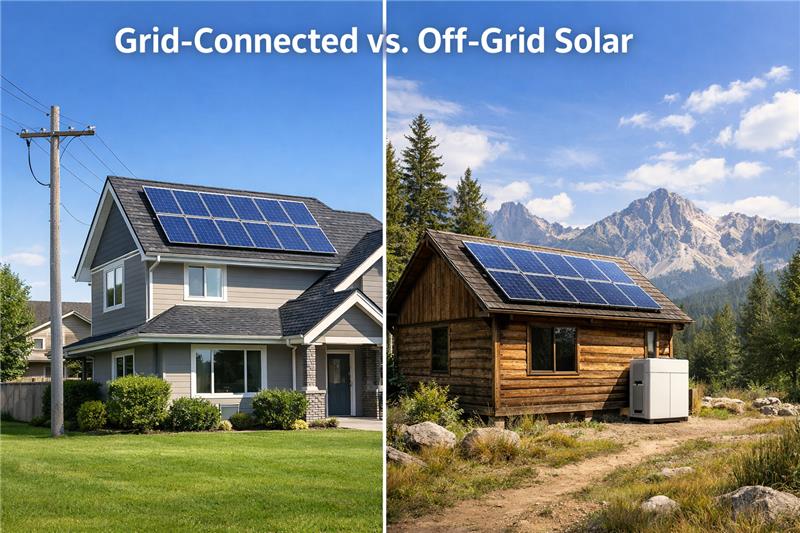
The main difference is the network connection. An on grid system stays connected to the power network; an off grid system does not. Most Australian homes choose on grid because it costs less and is straightforward to run. Off grid suits remote properties without network access. Hybrid sits in the middle.
| Feature | On Grid | Off Grid | Hybrid |
|---|---|---|---|
| Grid connection | Yes | No | Yes |
| Battery | Optional | Required | Yes |
| Blackout power | No, unless backup is installed | Yes | Yes, with backup setup |
| Upfront cost | Lowest | Highest | Middle |
| Best for | Most homes | Remote sites | Homes wanting backup |
Solar System Types at a Glance
On grid uses panels and the power network. Off grid uses panels and batteries, often with a generator. Hybrid combines panels, a battery and the grid. All use solar panels and an inverter; the difference is how power is stored and where backup comes from.
What Is an On Grid Solar System?
An on grid, or grid connected, system links your panels to the local network. Your home uses the electricity generated during the day. Excess power can be sent to the grid for a feed-in tariff. At night, or when panels do not produce enough, you draw power from the grid.
Benefits
- Lower upfront cost because a battery is not required.
- Simple design and easy upkeep.
- Potential feed-in credits for excess power.
- Can be expanded or paired with a battery later.
Drawbacks
- Feed-in rates are usually lower than the price paid for grid electricity.
- The system generally shuts down during a blackout unless configured with suitable backup.
It switches off during a network outage to protect line workers from live wires. A suitable battery backup setup can provide power to selected circuits.
What Is an Off Grid Solar System?
An off grid system has no network connection. It generates, stores and supplies the property’s power on site using panels, a suitably sized battery bank and an inverter. Many owners add a generator for extended cloudy periods.
Off grid offers independence, but it brings trade-offs:
- Cost: It can cost two to four times as much as a grid connected system.
- Batteries: Batteries wear out and need replacing.
- Sizing: Careful planning is needed for winter and low-sun periods.
- No feed-in tariff: There is no grid connection to export excess electricity to.
Is Off Grid Solar Worth It?
For most suburban homes, off grid solar is difficult to justify when a network connection is available. It may suit a remote property without network access, a site where a new connection would be very costly, or someone who wants full independence and accepts the cost and planning involved. For many Melbourne homes, grid connected solar with a battery can provide storage and backup for less than a fully off grid setup.
The Middle Option: Hybrid Solar
A hybrid system adds a battery to an on grid setup. It stores extra daytime power for evening use and keeps the grid as backup. With a suitable inverter and backup configuration, it can power selected circuits during a blackout.
Hybrid costs more than a basic on grid system but less than a fully off grid setup in many cases. The Australian Government’s Cheaper Home Batteries Program may reduce the upfront cost of eligible batteries. Rules and rates can change, so check current details before buying. Right Choice Solar can help match a battery to your system.
Costs and Rebates in Victoria
Victoria’s Solar Homes Program may offer a rebate of up to $1,400 to eligible households. Conditions apply; confirm current requirements with Solar Victoria before signing a contract. Your final cost depends on system size, panel and inverter brands, roof type and battery capacity. A clear quote should list these items.
How to Choose: A Simple Checklist
Ask yourself:
- Do I have network access? If not, off grid may be the only option.
- What is my budget?
- When do I use most of my power? Heavy evening use may point to a battery.
- How often do blackouts affect my area?
- Do I plan to add a battery or an EV later?
If you have a connection and a modest budget, start by comparing on grid systems. You can consider a battery later.
What Good Solar Panel Installation Looks Like
Look for a Clean Energy Council accredited installer, approved panels and inverters, a written quote with clear line items, written warranty terms and after-install support. Right Choice Solar designs systems around your roof and electricity use. If you are comparing solar installers in Melbourne, ask for on grid and hybrid quotes to compare costs side by side.
FAQs
What is the main difference between on grid and off grid solar?
An on grid system connects to the power network. An off grid system operates independently using batteries. On grid usually costs less; off grid provides greater independence.
Is off grid solar worth it?
It is rarely the most practical option for city homes. It can suit remote properties or places where a network connection is very costly.
Will my on grid solar system work in a blackout?
Usually not. Grid connected systems switch off during outages to protect line workers. A hybrid system with suitable backup can keep selected circuits running.
What is a hybrid solar system?
It combines panels, a battery and a grid connection, storing excess power while retaining the grid as backup.
Do I need a battery with grid connected solar?
No. Batteries are optional and may help if you use most power at night or want outage backup.
Which solar system type is best for Melbourne homes?
For most homes, on grid or hybrid is a practical starting point. Off grid is generally suited to properties without network access.
Final Thoughts: On Grid vs Off Grid Solar
The choice comes down to network access, budget and goals. On grid is a practical choice for many homes. Hybrid adds storage and backup. Off grid suits remote sites and people who want full independence and can accommodate the higher cost.
Not sure which system fits? Contact Right Choice Solar to compare options and request a quote for solar panel installation in Melbourne.
