23 Dec, 2025
| Mark
Barot


1.Introduction
2. Understanding Grid-Connected Solar Systems
3. Understanding Off-Grid Solar Systems
4. Factors to Consider Before Choosing a Solar System
5. Grid-Connected vs Off-Grid Solar: Side-by-Side Comparison
6. Conclusion
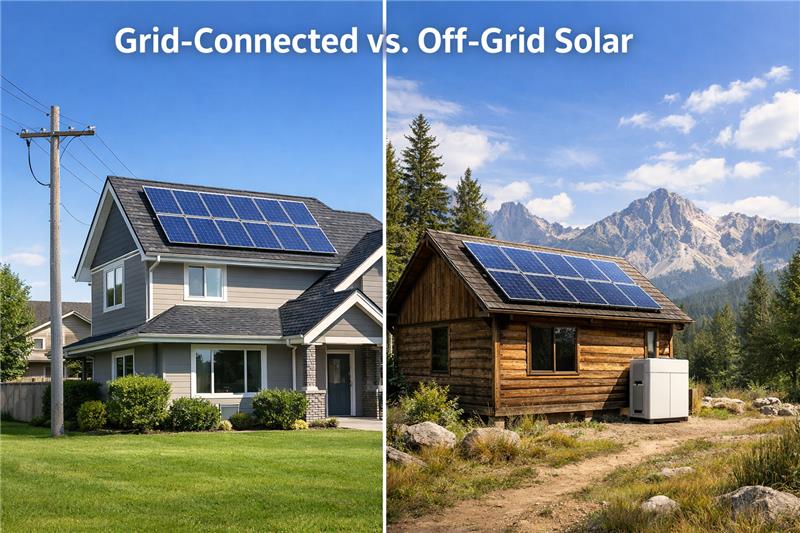
Solar power has become one of the most popular energy choices for homes and businesses across Australia. With rising electricity prices and a growing focus on sustainability, many people are switching to solar to reduce their power bills and environmental impact. However, when planning a solar installation, one important question often comes up, should you choose a grid-connected system or an off-grid system?
Understanding how each option works, their costs and their benefits will help you to make a confident decision. This guide breaks down everything you need to know about grid-connected and off-grid solar in a clear and practical way.
A Grid connected solar system is the most commonly installed solar setup in Australia. It is connected to the main electricity grid which allows your home or business to draw power from both solar panels and the grid. During the day, solar panels generate electricity that is used to power your appliances. Any excess electricity is sent back to the grid which often earns you credits through feed-in tariffs. At night or during cloudy weather, power is automatically supplied from the grid.
An On grid solar system is ideal for areas with reliable grid access and for users who want lower upfront costs. Since it does not require batteries, installation and maintenance are simpler and more affordable. This system is popular among urban households and commercial properties looking for consistent performance and long-term savings.
An Off grid solar system operates completely independently from the electricity grid. It generates, stores and supplies all the power needed for a home or business without relying on utility companies. These systems use solar panels along with batteries to store electricity for use at night or during low sunlight conditions. An Off grid solar system is commonly chosen in remote or rural areas where grid connection is unavailable or extremely expensive.
While off-grid systems provide full energy independence, they require careful planning. Battery capacity must be sufficient to handle daily usage and seasonal changes. This makes the system more complex and typically more expensive compared to grid-connected options.
Understanding the difference between on grid and off grid solar system helps you to balance affordability, reliability and independence based on your lifestyle and energy goals. Choosing the right solar setup depends on several practical factors :
Location : Remote properties may benefit more from off-grid systems while city homes suit grid-connected setups.
Budget : Grid-connected systems generally have lower upfront costs while off-grid systems require investment in batteries.
Energy Usage : Higher and more consistent power needs may require advanced storage solutions.
Power Reliability : If blackouts are common in your area, battery-based systems offer better security.
Future Needs : Many users consider upgrading to storage or hybrid options later.
| Feature | Grid-Connected Solar System | Off-Grid Solar System |
| Connection to Electricity Grid | Directly connected to the local power grid which allows energy to flow both ways. | Completely disconnected from the grid and operates independently. |
| Primary Power Source | Uses solar panels during the day and grid power when solar generation is low. | Uses solar panels along with battery storage to supply all electricity needs. |
| Battery Usage | Batteries are optional and mostly used only for backup during outages. | Batteries are essential to store power for night-time and cloudy days. |
| Energy Independence Level | Offers partial independence while still relying on grid support. | Provides full independence from utility companies. |
| Power Availability at Night | Automatically draws electricity from the grid. | Uses stored solar power from batteries. |
| Performance During Power Outages | Stops working during blackouts unless a battery backup is installed. | Continues supplying power without interruption. |
| Installation Cost | Lower upfront cost since no batteries are required. | Higher upfront cost due to battery systems and backup planning. |
| Maintenance Requirements | Minimal maintenance and fewer system components. | Higher maintenance due to batteries and system monitoring. |
| System Complexity | Simple design and faster installation process. | Requires detailed planning to match energy demand accurately. |
| Excess Solar Energy Handling | Excess power is exported to the grid for credits or feed-in tariffs. | Excess energy is stored in batteries or wasted if storage is full. |
| Ideal Location | Best suited for urban and suburban areas with reliable grid access. | Ideal for rural, remote, or off-grid locations. |
| Flexibility for Expansion | Easy to upgrade system size in the future. | Expansion can be limited by battery capacity and system design. |
| Long-Term Cost Efficiency | Lower initial cost with steady savings over time. | Higher initial cost but no electricity bills from the grid. |
| Typical Users | Homeowners and businesses seeking affordable solar savings. | Users prioritize energy independence and reliability. |
Choosing between grid-connected and off-grid solar ultimately depends on your location, budget and energy expectations. While grid-connected systems are ideal for most homes due to affordability and ease of use, off-grid systems are perfect for those seeking full independence.
Understanding the Cost of on grid & off grid solar system in Australia is very important before making a decision, as pricing varies based on system size, batteries and installation requirements. Over time, both systems can deliver strong returns through reduced electricity bills and long-term reliability. With the right setup, solar power can significantly boost Solar energy savings in Australia which makes it a smart and sustainable investment for the future.