12 Oct, 2026
| Mark
Barot


1. Introduction
2. How Do Solar Panels Work? A Step-by-Step Look
3. What Are Solar Panels Made From?
4. How Do Solar Panels Work on a House in Melbourne?
5. How Much Energy Is Generated by Solar Panels?
6. How Do I Know If My Solar Panels Are Working?
7. Why Choose a Local Melbourne Solar Installer?
8. Frequently Asked Questions
9. Ready to See How Solar Can Work for Your Home?
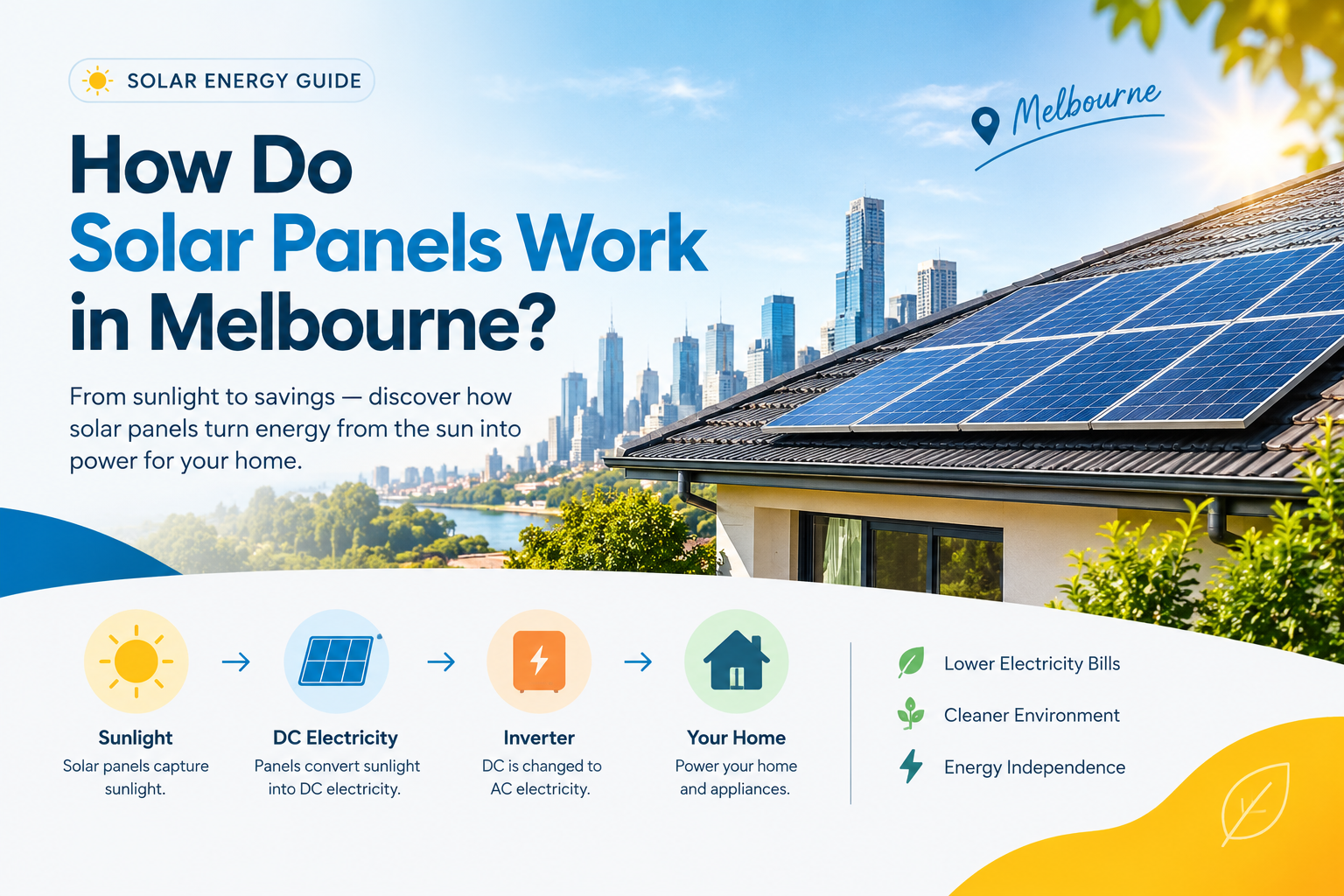
Solar panels turn sunlight into electricity. An inverter makes that power safe for your home. Extra power goes to the grid, and you earn a credit. Melbourne has enough sun for solar to work well all year.
How do solar panels work? It's a fair question, especially in Melbourne. Many people think solar needs hot, sunny weather. It doesn't. Panels run on light, not heat.
In short, solar panels turn sunlight into electricity for your home. You use what you need. The rest goes back to the grid. At Right Choice Solar, we explain this to Melbourne homeowners every week. Here is the simple version.
Solar panels absorb sunlight with silicon cells. The cells create direct current (DC) electricity. An inverter then converts it to alternating current (AC), the type your home uses. Your home uses the power first. Any extra flows to the grid.
Here is how solar energy works, step by step:
Sunlight hits your panels. Each panel holds dozens of solar cells.
The cells make DC power. Light knocks tiny particles loose inside the silicon. This is called the photovoltaic effect. It creates an electric current.
The inverter converts the power. Your appliances run on AC, not DC. The inverter is the translator.
Your home uses it first. Your fridge, lights and air conditioner run on solar power during the day.
Extra power goes to the grid. Your energy retailer pays you a feed-in credit for it.
That is how solar power is made, from roof to power point. There are no moving parts. That's why panels need so little upkeep.
A solar panel looks simple. But it has several layers that work together.
Silicon solar cells. These capture the light and create the current.
Tempered glass. It protects the cells from hail, wind and rain.
Aluminium frame. It holds the panel together and fixes it to your roof.
Backsheet. This layer seals the back against moisture.
Wiring and junction box. These carry the power out of the panel.
Most homes use monocrystalline panels. They're made from a single silicon crystal and are very efficient. Quality varies between brands, so ask what you're getting before you sign.
Melbourne has a reputation for grey skies. But solar still works well here.
Panels need light, not heat. In fact, very hot panels can lose some efficiency. Cool, clear days can be great for output.
Your output does change with the seasons. Summer days are long and strong. Winter days are shorter and cloudier, so you'll make less power from June to August. Over a full year, though, a Melbourne system produces a solid amount.
A few things shape how well solar panels work on a house:
Roof direction. North-facing roofs generate the most power in Melbourne.
Roof angle. A moderate tilt works best.
Shade. Trees and chimneys can cut output.
Panel and inverter quality. Better gear lasts longer and performs better.
At night, your panels rest. You draw power from the grid or from a battery if you have one. A battery stores your extra solar power for the evening instead of sending it to the grid.
Solar panels are sized in kilowatts (kW). Your output is measured in kilowatt-hours (kWh). Think of kW as the engine size and kWh as the distance travelled.
Here are typical Melbourne ranges for average daily output across the year:
| System size | Approx. daily output | Suits |
|---|---|---|
| 6.6kW | 20–25 kWh | Average family homes |
| 10kW | 30–38 kWh | Large, high-use homes |
Your real figures will vary. Season, shading and panel quality all make a difference. Most Melbourne homes use about 15 to 20 kWh a day, so a 6.6kW system suits many households. Not sure which size fits you? Our guide to the 6.6kW vs 10kW solar system explains how to choose.
Cost matters too. Government rebates, including small-scale technology certificates (STCs) and Victorian incentives, cut the price of solar installation. These change often, so ask for the latest numbers in a free solar quote.
Read Also: 6.6kW Solar System Melbourne: Cost, Savings & Installation Guide
Good question. Many owners never check. Here is a quick routine:
Look at your inverter. A steady green light usually means all is well. A red light or error code needs attention.
Use the monitoring app. Most systems show daily output on your phone.
Compare your bills. A sudden jump in grid use can signal a problem.
Check for shade or dirt. New tree growth or heavy grime can cut output.
Watch for zero output on sunny days. That's a red flag.
If something looks wrong, call a licensed installer. Don't climb on the roof yourself.
Solar isn't one-size-fits-all. Roofs, council rules and network approvals vary across Melbourne. A local team knows how to handle them.
When you compare solar panel installers in Melbourne, look for:
Clean Energy Council (CEC) accredited installers
Quality panels and inverters with strong warranties
Clear, itemised pricing
Real local reviews
Good solar panel installation in Melbourne starts with an honest roof check. Right Choice Solar looks at your bills, your roof and your plans first. Then we recommend a system that fits. Whether you want solar panels in Melbourne for the first time or an upgrade, you get clear advice and no pressure.
Do solar panels work on cloudy days in Melbourne?
Yes. Panels still make power in cloud, just less of it. Output on an overcast day is usually a fraction of a clear day.
Can solar panels work at night?
No. Panels need light to make electricity. At night you use grid power, or stored power if you have a battery.
How long do solar panels last?
Most quality panels last 25 years or more. They lose a small amount of output each year, and the warranty usually covers this.
What happens to extra solar power I don't use?
It flows to the grid. Your energy retailer pays you a feed-in credit, which varies by provider.
Do solar panels need cleaning or maintenance?
Very little. Rain does most of the work. A yearly check by a licensed installer keeps things running well.
So, how do solar panels work? Sunlight in, clean power out, lower bills for you. Melbourne's climate suits it well, and the right system can pay for itself over time.
Right Choice Solar is here to help. Contact us today for a free, no-obligation solar quote and roof assessment. We'll show you how solar can work for your Melbourne home.