08 Dec, 2025
| Mark
Barot


1. Introduction
2. What Is a Standalone Solar Battery System?
3. What Is a Hybrid Solar Battery System?
4. Hybrid vs. Standalone: Key Differences
5. Which One Should You Choose?
6. Conclusion
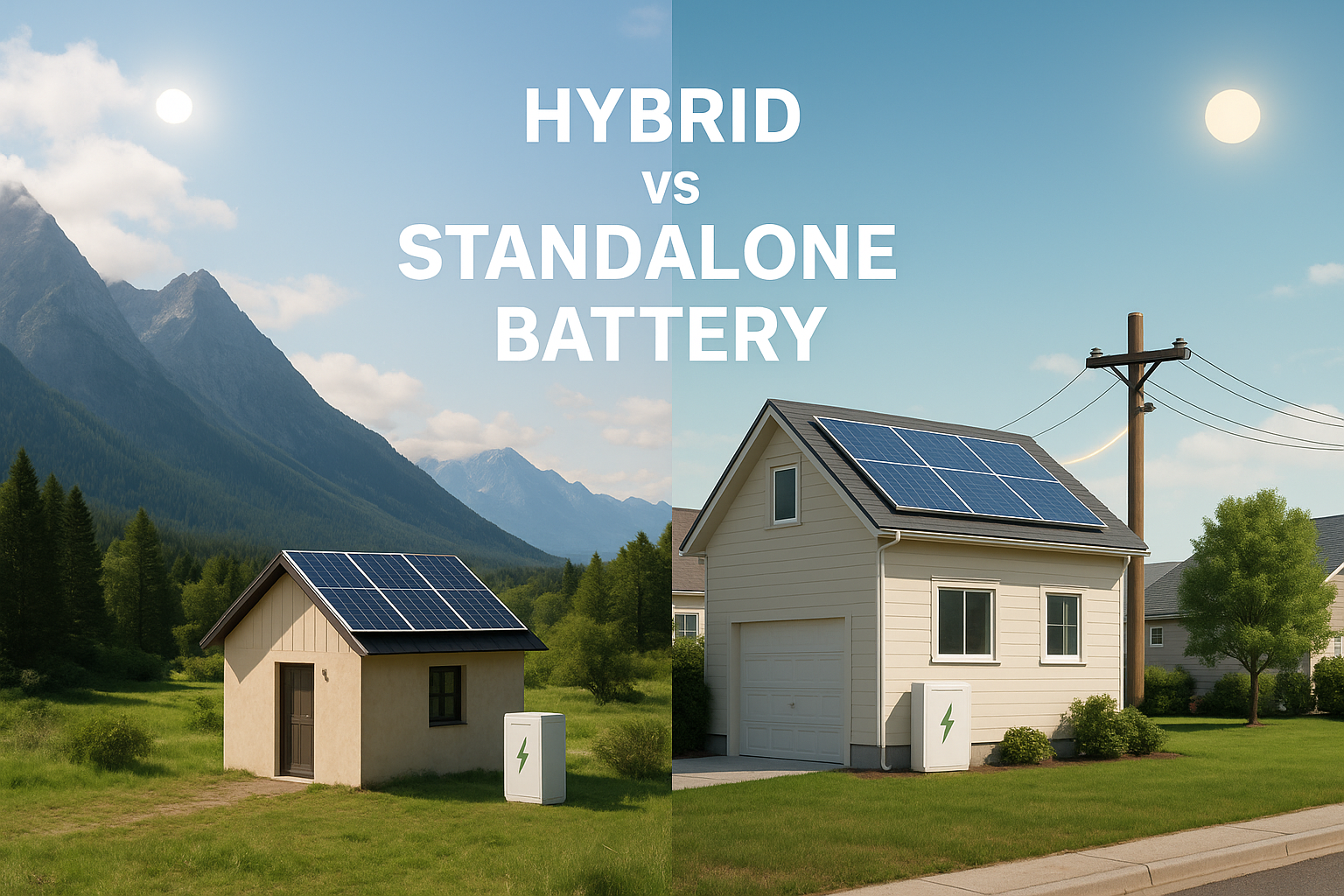
A solar battery system transforms how you store and utilize your home’s electricity. Instead of depending only on daytime sunlight or the power grid, solar batteries give you the control to use energy whenever you need it. Today, the two top choices for homes and businesses are the standalone solar battery setup and the hybrid solar home battery storage system. While both improve energy resilience, they serve different needs and environments. Let’s explore the differences that help you to make the right investment.
This setup operates independently without any connection to the utility grid. It is a reliable choice for those who want uninterrupted access to power, no matter where they live.
Because it depends entirely on solar production, it is ideal for properties that require off-grid solar power as their primary energy source. It performs consistently even during storms which ensures reliable solar backup power solution capabilities when grid-connected homes go dark.
Some of the Key benefits for the same are given below :
Independence from rising electricity prices
Complete blackout protection
Works even in remote areas
A hybrid system allows your property to run on both the battery and the power grid. It gives you the flexibility to balance consumption with cost savings.
These systems use multiple solar energy sources and can intelligently shift between them depending on demand and storage availability. They also support inverter battery applications which make them suitable for modern homes with appliances that require stable power
Why hybrids are so popular:
Provides smart solar energy management for optimized performance
You get higher efficiency because of solar system integration with existing setups
Helps homeowners achieve solar energy cost reduction over time
| Feature | Standalone Solar Battery System | Hybrid Solar Battery System |
| Energy Source | Uses only solar power for charging and usage | Uses solar primarily with grid as backup |
| Backup Performance | Provides long-duration power independence | Offers quick backup with smooth grid switching |
| Location Suitability | Best for remote or rural homes without grid | Ideal for city and suburban homes with grid access |
| Cost Efficiency | Higher upfront cost without grid savings | Improves energy savings by reducing grid dependency |
| Technology | Basic controls and limited smart features | Intelligent energy automation and monitoring |
| Scalability | Harder to expand once installed | Can easily upgrade storage capacity over time |
| Installation | More complex due to off-grid setup | Standard installation supported by most providers |
| Best For | Users seeking complete independence can go for it | Users wanting savings and reliable energy mix can choose this |
Both battery types include intelligent features but hybrid systems often go a step further using an intelligent solar energy controller which improves usage decisions automatically. Standalone battery technologies are typically optimized for voltage stabilization for solar systems which maintains safe and consistent power output during fluctuations and harsh conditions.
Choose standalone if:
Choose hybrid if:
Both standalone and hybrid solar battery solutions give you reliable and renewable energy. Your decision depends on whether your priority is complete self-sufficiency or smart integration with the grid for maximum savings. By choosing the right system today, you can ensure energy security, lower expenses and a cleaner environment for the future.