22 Jan, 2026
| Mark
Barot


1.Introduction
2. What Is a Solar Panel Warranty ?
3. What Is an Inverter Warranty ?
4. Solar Panel Warranty vs Inverter Warranty
5. Which Warranty Is More Important ?
6. Questions to Ask Before You Buy
7. Tips for Choosing the Right Warranty
8. Conclusion
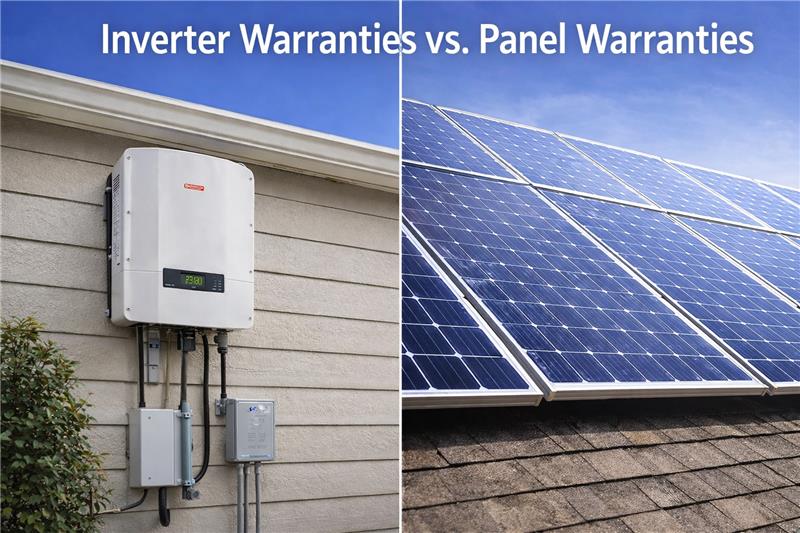
When buying a solar power system, most homeowners compare panel efficiency, inverter brands and price. But one important factor is often overlooked - the warranty.
A solar system is expected to last 20 - 25 years. During that time, your solar panels and inverter perform different jobs and have different lifespans. That's why they come with different warranty terms.
Understanding the difference between inverter warranties and panel warranties can help you avoid unexpected repair costs and choose a system that offers better long-term value.
In this guide, we'll explain how each warranty works, what it covers and which one matters most for your investment.
A solar panel warranty protects your panels against manufacturing defects and long-term performance loss.
Because solar panels have no moving parts, they're built to last for decades and usually require very little maintenance.
Most manufacturers offer two types of panel warranties.
Product Warranty
This covers manufacturing faults or material defects. If a panel fails because of a manufacturing issue during the warranty period, the manufacturer will usually repair or replace it.
Performance Warranty
This guarantees that your panels will continue producing a certain level of electricity over time.
Many manufacturers provide a 25-year performance warranty, ensuring the panels still produce a high percentage of their original output after many years of use.
A solar panel warranty typically includes:
Protection against manufacturing defects
Long-term performance guarantee
Coverage for 20–25 years
Low risk of failure
The inverter is the part of your solar system that converts the electricity generated by your panels into power your home or business can use.
Unlike solar panels, inverters contain electronic components that wear out over time. Because of this, inverter warranties are usually shorter.
Most solar inverters come with a warranty of 5 to 10 years, although many manufacturers offer extended warranty options.
An inverter warranty usually covers:
Electrical or electronic faults
Manufacturing defects
Repair or replacement during the warranty period
Optional extended warranty plans
Because the inverter works harder than most other components, it is more likely to need replacement during the life of your solar system.
Both warranties protect different parts of your solar system.
Here's a simple comparison.
| Feature | Solar Panel Warranty | Inverter Warranty |
| Purpose | Protects the solar panels | Protects the inverter |
| Typical Warranty | 20–25 years | 5–10 years |
| Performance Guarantee | Yes | No |
| Manufacturing Defects | Yes | No |
| Expected Lifespan | 25+ years | Around 10–15 years |
| Chance of Replacement | Low | Higher |
| Extended Warranty Available | Rarely needed | Often available |
| Maintenance | Very little | Periodic checks recommended |
The truth is, both warranties matter.
A strong panel warranty protects your long-term energy production, while a good inverter warranty helps reduce the risk of unexpected repair or replacement costs.
It's also important to check the workmanship warranty offered by your installer.
Even high-quality solar equipment can perform poorly if it isn't installed correctly.
Before choosing a solar system, make sure you understand:
How long the panel warranty lasts
How long the inverter warranty lasts
What the installer's workmanship warranty covers
Whether extended inverter warranties are available
Looking at all three warranties gives you better protection throughout the life of your solar system.
Before signing a contract, ask your solar installer these questions:
How long is the panel product warranty?
How long is the inverter warranty?
Does the panel include a 25-year performance warranty?
What does the workmanship warranty cover?
What does the workmanship warranty cover?
Can the inverter warranty be extended?
Who handles warranty claims if something goes wrong?
These questions can help you avoid unexpected costs in the future.
When comparing solar quotes, don't focus only on the system price.
Instead, look for:
Clear warranty terms
Reputable panel and inverter brands
A reliable installer with local support
Long product and performance warranties
Good after-sales service
A slightly higher upfront cost can often provide better protection over the life of your solar system.
Solar warranties are an important part of protecting your investment.
Solar panels usually come with long product and performance warranties because they are built to last for decades. Inverters, however, contain electronic components that are more likely to wear out, so they typically have shorter warranty periods.
By understanding the difference between panel warranties, inverter warranties and workmanship warranties, you can choose a solar system that delivers reliable performance and long-term peace of mind.
Before making a decision, compare more than just the price. Look at the warranty coverage, installer reputation and after-sales support to make sure your investment is protected for years to come.