11 August, 2026
| Mark
Barot


1. Introduction
2. So What Does an Inverter Even Do?
3. The Main Types You'll Run Into
4. The Stuff That Actually Matters
5. So What's Actually the Best Choice?
6. A Few Things Worth Doing Before You Sign
7. Frequently Asked Questions
8. Conclusion
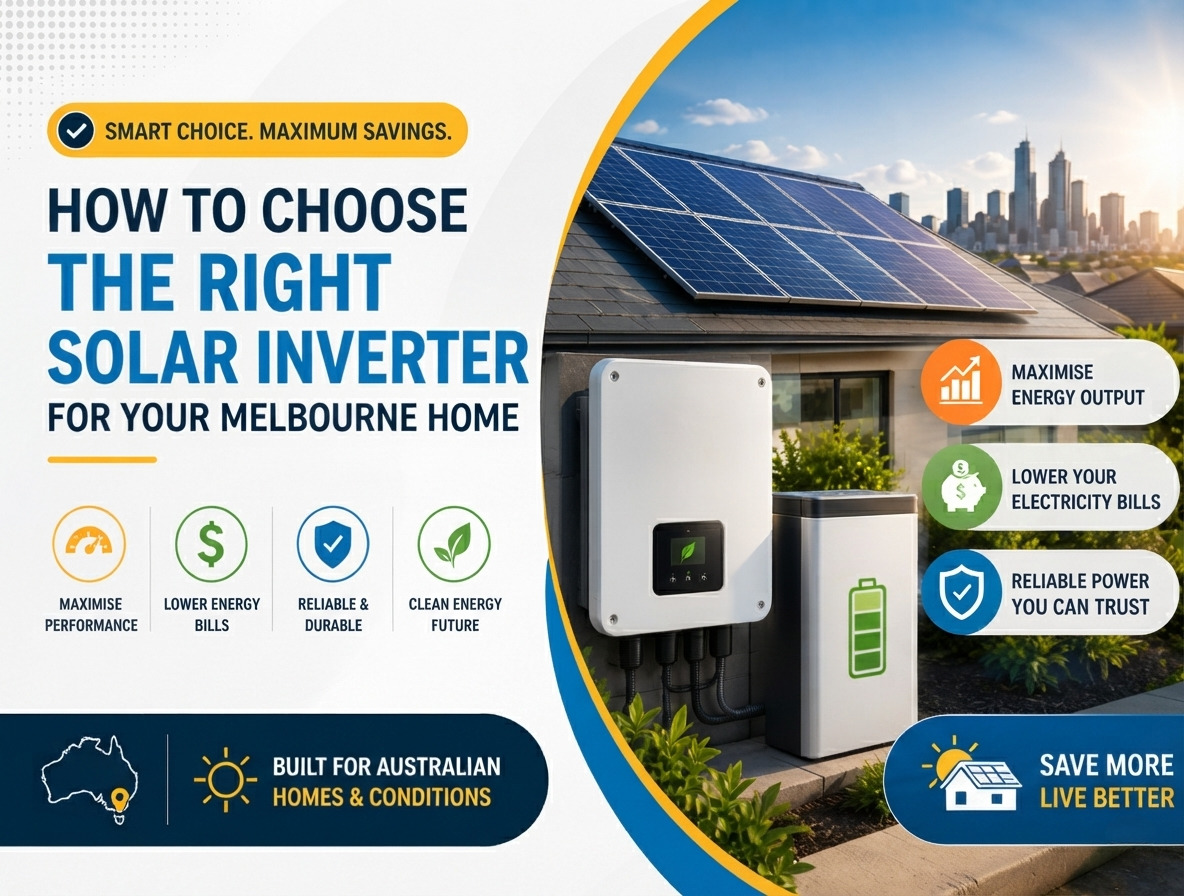
Everyone gets excited about picking solar panels - the brand, how many they need, how it'll look on the roof. But here's the thing nobody tells you: the inverter is doing most of the actual work. It's the unglamorous box on your wall that decides how much of that sunlight hitting your roof actually turns into power you can use to run your fridge, your telly, your aircon.
So before you sign anything, let's actually talk about what makes a good solar inverters Melbourne homeowners can trust, and why it deserves way more attention in your solar system decision than most people give it.
Panels create DC power. Your house runs on AC. Somebody has to convert one into the other, and that's the inverter's whole job. Get a cheap one, or one that's the wrong size for your setup, and you're quietly losing electricity you already paid to generate. You might not even notice it - it just shows up as a slightly higher bill than you expected. This matters more than usual here too, because solar panels Melbourne homes install have to deal with genuinely unpredictable weather. Sunny one hour, grey the next. A decent inverter handles that without skipping a beat.
String inverters are what most people end up with. They're the standard pick for a typical solar installation Melbourne job, they're cheaper, and they work fine as long as your roof gets even sun without much shading.
Microinverters are a bit different - each panel gets its own little inverter instead of one central unit. If your roof has awkward angles, or a tree keeps shading part of it, these are worth the extra cost.
Then there's the hybrid solar inverter, which is honestly becoming the smarter pick for a lot of Melbourne homes. It runs your panels and a battery together as one system. So if you think you might add a battery down the track, going hybrid now means you skip buying a separate solar battery inverter later.
Getting the size right. This is where a lot of quotes go wrong. Solar inverter size needs to match your panel output and how much power your household actually uses. Undersized and you're wasting energy your panels are producing. Oversized and you've just spent extra money for no reason. A good installer runs the numbers properly instead of slotting in whatever's on the shelf.
Efficiency. Most decent inverters convert above 95% of the power that comes through them. Doesn't sound like much of a gap, but over ten years of daily use, especially through Melbourne's grey winters, it adds up.
Warranty. Don't skim past this bit. A solid solar inverter warranty tells you the manufacturer actually trusts what they've built. Anywhere from 5 to 10 years is normal, and some hybrid models go up to 12 or 20 years. Longer warranty, fewer surprise repair bills.
Brand and support. If you're hunting for the best solar inverter Australia has going, don't just look at the price tag. Ask if there's local support - someone who can actually come fix it if something goes wrong. Names that keep coming up as trusted solar inverter brands Australia include Fronius, SMA, Sungrow, Goodwe, and SolarEdge. Each one suits slightly different roofs and budgets.
Honestly, there's no single best solar inverter for home setups everywhere - it comes down to your roof, how much power your household chews through, and whether a battery's on the cards. But the pattern that separates a good pick from a regretful one is always the same: right size, decent warranty, brand you can actually trust. For a lot of typical Melbourne homes, a solar inverter Australia-certified hybrid unit somewhere between 5kW and 8kW ends up being the right fit.
Get your installer to actually explain why they picked that size and brand for your house, not just hand you a generic quote.
See if the inverter has a phone app for monitoring - most decent ones do now.
Got shading issues? Lean toward microinverters instead of a plain string setup.
Check the noise level too, some run louder than you'd expect, so think about where it's mounted.
Get a couple of quotes and actually compare warranty length and support, not just the number at the bottom.
How long do these things last?
Usually 10 to 15 years, give or take, depending on the brand. Panels tend to outlast inverters, so don't be shocked if you need to swap yours out once during the system's life.
Can I go hybrid later if I start with a regular string inverter?
You can, but it'll cost more and mean extra work. If a battery's even a maybe for you down the line, it's usually cheaper to just install the hybrid solar inverter from day one.
What size do I actually need?
For a typical 6kW to 10kW panel setup, most homes land somewhere between 5kW and 8kW on inverter size. But your installer should be working this out from your real usage, not guessing.
Does a longer warranty mean it's better made?
Mostly, yes. It's not a guarantee, but it's a decent signal. Worth checking a few reviews too, just to be safe.
Do I need two inverters if I get a battery?
Nope. That's the whole point of hybrid - the battery function's already built in, so you're not paying for a second unit.
Don't treat the inverter like an afterthought just to get your installation over the line. It's the part of your setup that's quietly turning sunlight into real savings every single day, whether you're paying attention or not. Whether you end up with a string inverter, microinverters for a tricky roof, or a hybrid solar inverter ready for a battery, the priority stays the same - right size, solid warranty, brand you actually trust. Ask the right questions before you sign, and your system should keep performing well for the next decade or so.