12 Oct, 2026
| Mark
Barot


1. Key Takeaway
2. Introduction
3. Do Solar Panels Work in Shade?
4. How Much Does Shade Reduce Solar Efficiency?
5. What Happens If One Solar Panel Is Shaded?
6. Shade Tolerant Solar Panels and Smart Technology
7. Is Solar on a Shaded Roof Worth It?
8. Choosing a Local Installer
9. Frequently Asked Questions
10. Make the Right Call
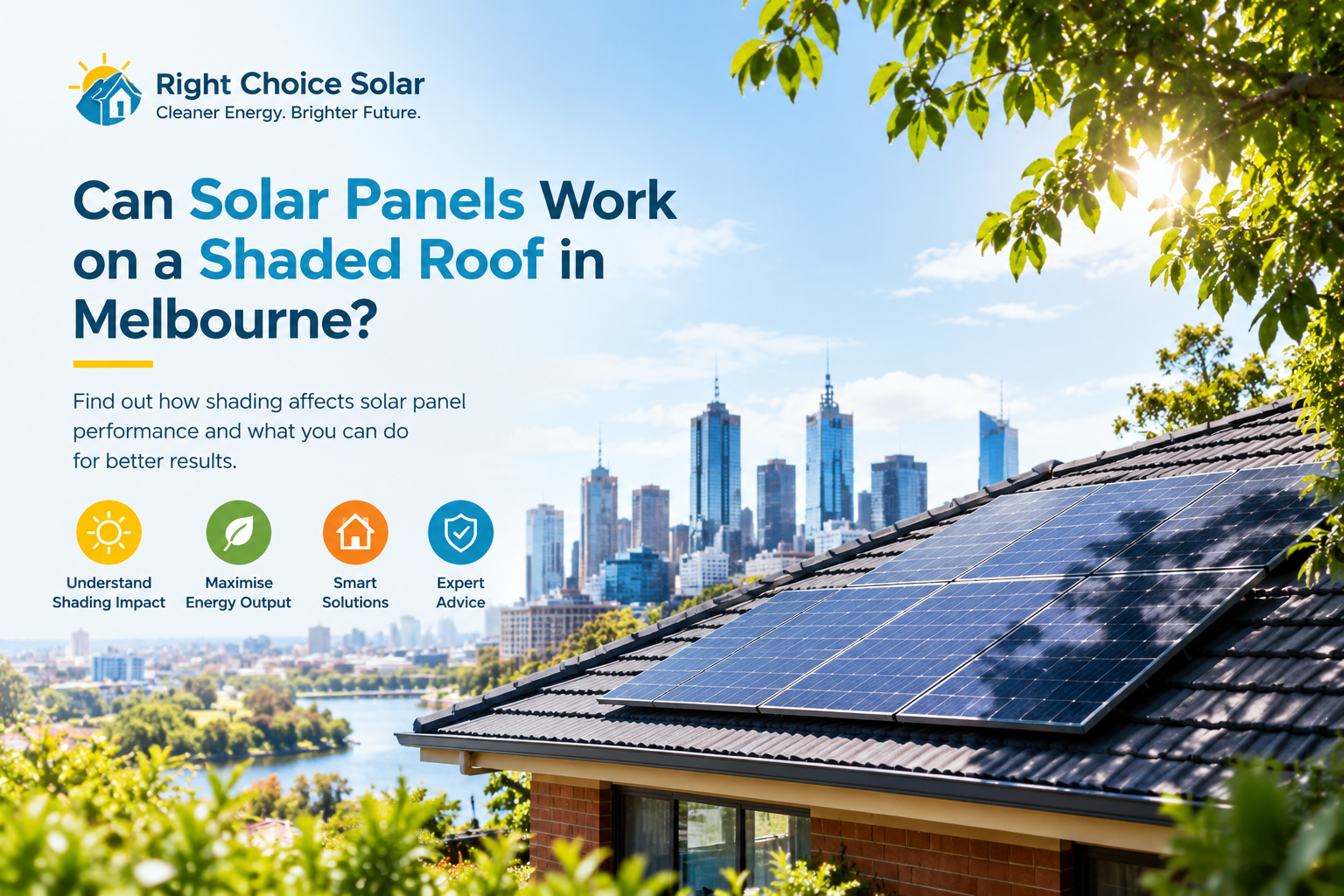
Solar panels still work in the shade, but they make less power. Light shade costs a little. Heavy shade costs a lot. Smart equipment can limit the loss. A site assessment tells you if your roof is worth it.
A tree, a chimney or a neighbour's wall can shade your roof. So can solar panels in shade still pay off? Many Melbourne homeowners ask us this.
The short answer is yes, but output drops. How much it drops depends on your roof and your equipment. At Right Choice Solar, we assess shaded roofs every week. Here's how to judge yours.
Yes. Solar panels work in shade, just not as well. Panels need light, and shade reduces how much reaches the cells. Direct sun gives the most power. Shade and cloud give less, but not zero.
There are two kinds of light. Direct light comes straight from the sun. Diffuse light bounces around in the sky. Panels can use both. They just make far more from direct light.
The same goes for solar panels on cloudy days. In Melbourne, a cloudy day might give you a fraction of a clear day's output. A light cloud costs less than a heavy cloud. Over a full year, the clear days do most of the work.
Read Also: How Do Solar Panels Work in Melbourne?
It depends on three things: how much shade, when it falls and how long it lasts.
Timing matters too. Shade at midday costs more than shade at 8am or 5pm. Midday is when panels make the most power.
Melbourne adds a twist. In winter, the sun sits low. Shadows from trees and neighbouring buildings stretch much further. A roof that's clear in January can be shaded in July.
Here's a simple example. Say shade hits a third of your panels for three hours around midday. You could lose a noticeable chunk of that day's output. Your real figure will differ, so treat this as a guide only.
On a basic system, panels are wired in a row, called a string. Shade on one panel can pull down the whole string. Think of a kink in a garden hose. The water slows down everywhere, not just at the kink.
Modern panels have some built-in help. Bypass diodes let the current skip a shaded section. Half-cut cells also cope better with partial shade. But these only soften the hit. They don't remove it.
The real fix is in how you wire and manage the panels.
No panel is fully shade proof. But some setups are far more shade tolerant than others. Your inverter choice matters most.
Optimisers and microinverters cost more. But on a shaded roof, they can win back power that a basic system would lose.
| Technology | How it handles shade | Cost | Best for |
|---|---|---|---|
| String inverter | One shaded panel can drag down its whole string | Lowest | Clear, unshaded roofs |
| Power optimisers | Each panel is managed on its own | Medium | Partial or changing shade |
| Microinverters | Each panel works independently | Often highest | Complex roofs, patchy shade |
Layout helps too. Your installer can split panels across roof faces. East and west roofs often dodge shade that hits the north side. They may also suit your daily power use well.
Remember, technology reduces the loss. It can't create sunlight. Solar shading that lasts all day will still limit your output.
Sometimes yes, sometimes no. Here's a quick guide.
Solar on a shaded roof is often worth it if:
It's probably not worth it if:
You also have options. Trimming a tree may lift output a lot. Check your council's rules first, as some trees are protected. You could move panels to a clearer roof section. Or you could choose a smaller system sized for the sunny area.
Costs matter too. Rebates such as small-scale technology certificates (STCs) cut the upfront price. These change over time, so we confirm the latest in every free solar quote. Not sure about your roof? Ask for a shading assessment before you decide.
Melbourne has leafy streets, tight blocks and low winter sun. A local team understands how these affect solar installation in Melbourne.
When you compare installers, look for:
At Right Choice Solar, we look at your roof across the seasons. If solar panels in Melbourne aren't a good fit for your shaded roof, we'll tell you straight. If they are, we'll design a setup that gets the most from your sun. That's true for solar panels in Melbourne, VIC and the suburbs around it.
Do solar panels work on cloudy days in Melbourne?
Yes. Panels still make power in cloud, just less of it. Output on an overcast day is a fraction of a clear day.
How much power do solar panels lose in shade?
It varies. Light shade causes a small loss. Heavy shade can cause a large one. A site assessment gives you a real estimate for your roof.
Are microinverters better for a shaded roof?
Often, yes. Each panel works on its own, so shade on one panel affects the others far less. They usually cost more upfront.
Can I trim trees to improve my solar output?
Often, yes. Check your council rules first, as some trees are protected. Talk to your neighbour if the tree is on their land.
Do solar panels work in winter shade?
Yes, but output is lower. Winter sun sits low and shadows run long. Your installer should check the roof for shade across all seasons.
So, can solar panels in shade still work? Yes. Shade lowers output, but it doesn't end the case for solar. The right equipment and layout can win back a lot of lost power.
Right Choice Solar is here to help. Contact us today for a free, no-obligation solar quote and shading assessment. We'll show you what solar can do on your Melbourne roof.