28 March, 2026
| Mark
Barot


1. Introduction
2. Batteries Are Finally Worth the Conversation
3. Virtual Power Plants Are Past the Pilot Stage
4. Commercial Solar Is Where the Big Money Is Moving
5. Smarter Technology, Less Effort
6. The Transition Australia Can't Slow Down
7. Conclusion
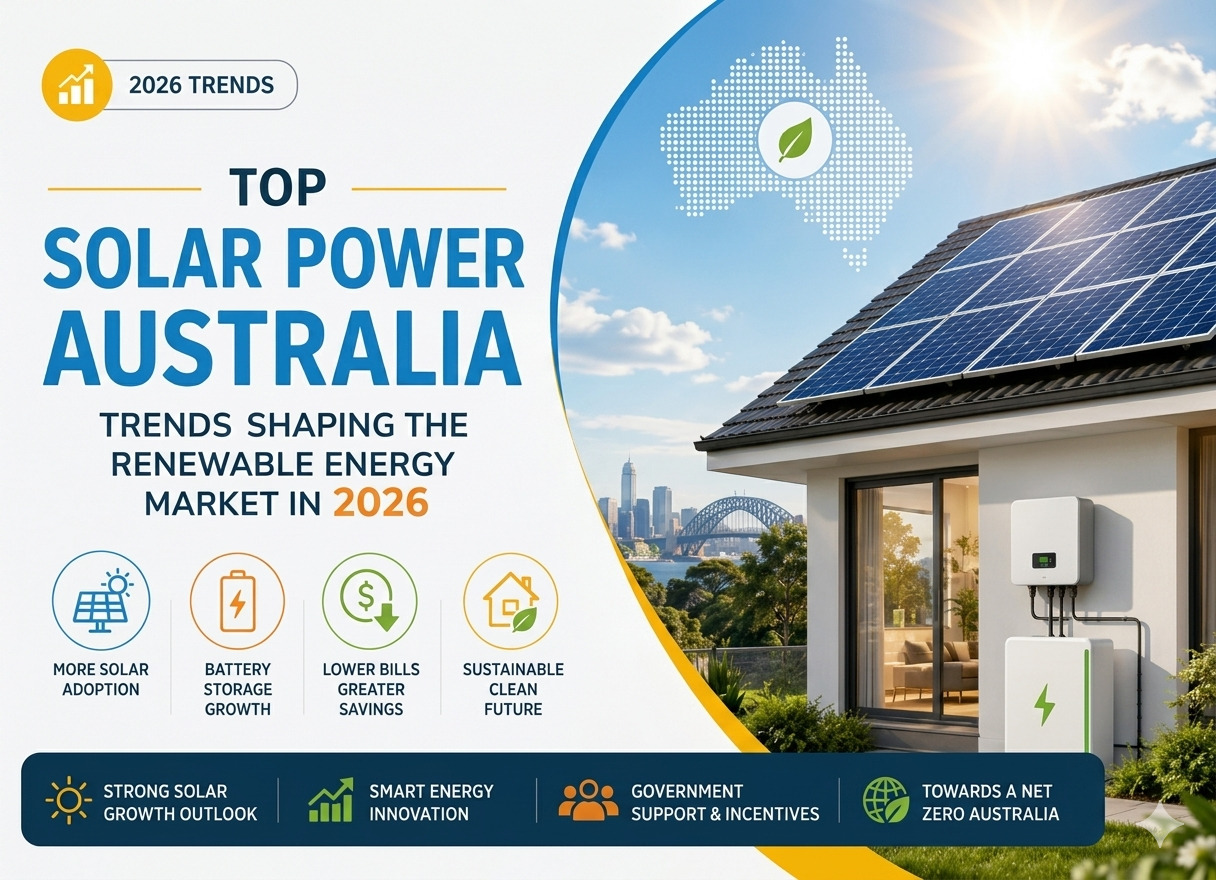
Australia has always had a complicated relationship with the sun. Too much heat, not enough shade, and somehow still a country that took longer than expected to properly harness what shines down every single day. But 2026 feels different.
Solar power australia wide has stopped being a rooftop experiment and started becoming the foundation of how this country actually powers itself. This isn't policy talk or corporate greenwashing. Real change is happening - in backyards, warehouses, suburban streets, and on commercial rooftops from Perth to Brisbane. Here's what's shaping the market right now, and what it means for everyday australians.
For years, the honest answer to "should I get a battery?" was not quite yet. That answer has changed.
Home battery storage australia homeowners are looking at has dropped in cost, while power bills have moved in the opposite direction. People aren't just chasing savings anymore - they want independence. The ability to ride out an outage, dodge peak pricing, and actually use the solar energy their panels generate instead of selling it back for a shrinking feed-in tariff.
For many households, a battery is no longer the expensive extra. It's the missing piece.
Virtual power plants australia operators spent years proving the concept. Now they're infrastructure. That's ae proving the business model.
A VPP australia network links thousands of home batteries together, letting them act as one large power source when the grid needs it most. What's changed in 2026 is the reason people are joining - not just environmental motivation, but real financial returns for participating.
Distributed energy resources like rooftop solar and home batteries, connected through smart platforms, are quietly doing work that once required expensive centralised genuine shift not a headline.
Commercial solar australia is having a breakout year, and it's not hard to understand why.
Energy costs for businesses have been painful long enough that waiting is no longer a strategy. Commercial solar installation australia projects are delivering payback periods under five years in many cases - the kind of number that gets a CFO's attention without any sustainability pitch attached.
Solar investment australia wide has moved from an ESG talking point to a hard financial decision. Accountants and operations managers are driving these conversations now, not just sustainability teams.
Smart inverter technology and AI in renewable energy platforms have quietly improved how solar systems perform - without homeowners needing to do anything differently.
Modern inverters read weather forecasts, respond to grid pricing signals, and adjust battery behaviour in real time. For most people, it all happens in the background. It just shows up on the bill.
For commercial operators, AI-driven monitoring is catching performance issues - shading losses, panel degradation, wiring faults - before they turn into costly problems. The technology has matured well past the early-adopter stage.
All of this sits inside something much larger. The renewable energy transition australia is facing is being shaped by federal targets, corporate net zero australia commitments, and a population making energy decisions based on cost as much as conscience.
Sustainable energy australia wide means building systems that are resilient, not just cleaner. Rooftop solar, large-scale farms, home batteries, and smart grids working together - that's what the future of renewable energy in australia actually looks like in practice.
The 82% renewable electricity target by 2030 is ambitious. Solar power australia is central to reaching it.
What stands out most about 2026 isn't any single technology or policy announcement. It's the quiet shift in how australians are thinking about energy. Solar is no longer the alternative choice. For a growing number of homes and businesses, it's simply become the obvious one. The households and businesses making the most of this moment are treating solar not as a cost to recover, but as infrastructure to build on - adding batteries, joining VPP australia programs, and letting smarter systems handle the rest.
Sustainable energy australia wide isn't a campaign slogan anymore. It's a practical, financially sound decision that more australians are making every single day. And the momentum is only heading in one direction.